History of Tellapur, Hyderabad

Tellapur has a long and important history that dates back over 600 years, making it one of the earliest recorded settlements in the western region of Hyderabad. The earliest written reference to Tellapur appears in a 1418 AD stone inscription, where it was called “Telumganapuram”, believed to be an early form of the name Telangana.
Over centuries, Tellapur evolved from a forested hunting zone during the Golkonda period to an agricultural village under the Nizams, and later into a developing suburb after the 1990s IT boom. Its historical journey shows how this small rural settlement slowly became part of Hyderabad’s expanding metropolitan region.
Tellapur falls under the Sangareddy district and uses the PIN code 502032 (the bordering Velimela–Kollur belt, where Prestige Golden Grove is located, falls under 502300). It had a population of 24,193 people as per the 2011 Census, and this number has grown sharply in the last decade as new apartments and tall towers have come up.
Tellapur at a Glance
- Location: Ramachandrapuram mandal, Sangareddy district, West Hyderabad
- Pin code: 502032 (the bordering Velimela–Kollur side, home to Prestige Golden Grove, is 502300)
- Civic status: Cyberabad Municipal Corporation (formerly Tellapur Municipality, 2018 — merged into GHMC in December 2025 and placed under Cyberabad MC in the February 2026 reorganisation)
- Population: 24,193 as per the 2011 Census — rising sharply with new high-rise communities
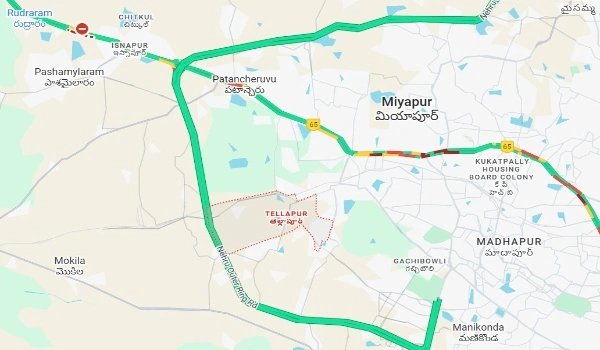
- Connectivity: about 6–7 km to Gachibowli, ~5 km to the Financial District, and quick access to HITEC City via the ORR
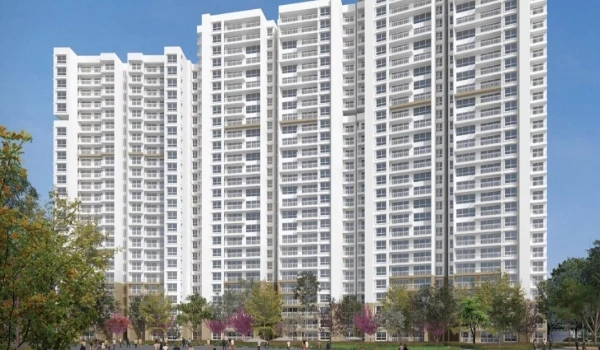
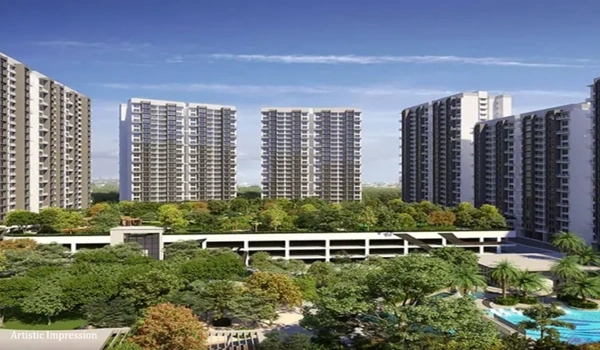
- Known for: premium gated communities, township projects and some of Hyderabad’s tallest residential towers
What Is the History of Tellapur, Hyderabad?
Early References (15th Century – “Telumganapuram”)
The history of Tellapur goes back over 600 years. A stone inscription dated 8 January 1418 AD was found in Tellapur village. It mentions the name “Telumganapuram”, which historians believe is an early form of the word “Telangana”. This makes Tellapur one of the earliest places where the name linked to Telangana appears in written history.
The inscription belongs to the time of Feroz Shah Bahmani and talks about building a well and supporting artisan work in the area. It is carved on granite pillars near an old step-well in Tellapur. This shows that Tellapur was already an active settlement, with water structures and community life, in the 15th Century.
Forest and Hunting Grounds in the Golkonda Period
Studies on the region note that Tellapur was once a thick forest area developed by a Golkonda Nawab as a hunting ground. Large hunting forests were common around Hyderabad during the Golkonda and later periods. Tellapur’s location, close to the city but still full of open land, made it suitable for this purpose.
Over time, parts of this forest were cleared and converted into farming land. Slowly, Tellapur began to shift from a pure forest zone to a mixed agricultural settlement.
Tellapur as an Agricultural Village (Nizam Period)
During the Nizam period, Tellapur functioned mainly as a small agrarian village. One study notes that it had around 100 households at that time. Most families depended on farming and artisanal work for their livelihoods. It was described as a multi-caste Hindu village, with many residents from traditional service and artisan communities.
The village also benefited from nearby water bodies like Osman Sagar (Gandipet Lake), which supported agriculture in the western belt of Hyderabad. This kept Tellapur connected to the larger rural economy around the city.
Post-Independence to Late 20th Century: A Quiet Outskirts Village
After Indian independence in 1947 and through the 1960s–1980s, Tellapur continued to be a quiet village on the outskirts of Hyderabad. It lay close to important corridors like the old Mumbai Highway and the areas around BHEL township and Lingampally, but urban growth had not yet reached it.
Most land parcels in and around Tellapur were still used for:
- Crop fields
- Open plots
- Small houses
- Wells and tanks
- Simple village roads
The population remained low, and the village identity stayed strong.
1990s–2000s: IT Boom and the Outer Ring Road
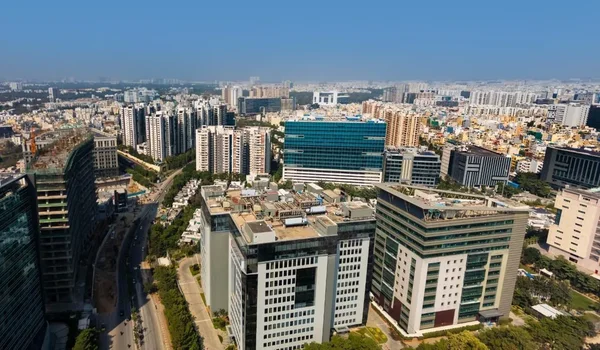
The big change started in the late 1990s and 2000s, when Hyderabad became a major IT and services hub. Areas like HITEC City, Gachibowli, and the Financial District began to grow rapidly. As these employment centres expanded, the demand for nearby residential land increased.
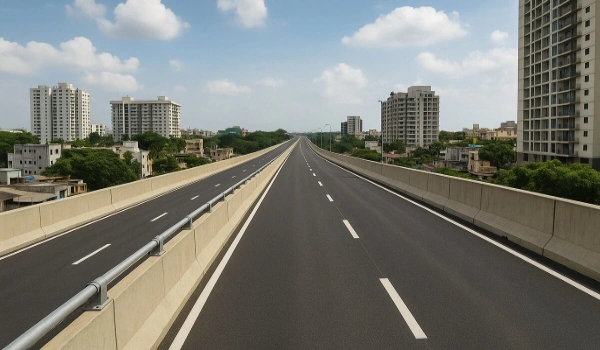
At the same time, the Nehru Outer Ring Road (ORR) project was planned and launched in the early 2000s. The ORR is a 158 km eight-lane expressway that connects major parts of Hyderabad. Large stretches opened by 2012, linking IT hubs, the airport, and expanding suburbs.
Tellapur sits close to one of the ORR junctions and connects further towards Gachibowli, Nanakramguda, and the Financial District via radial roads. This strategic location made Tellapur a major zone for plotted layouts, villa projects, and apartment townships.
2010s: From Village to High-Rise Micro-Market
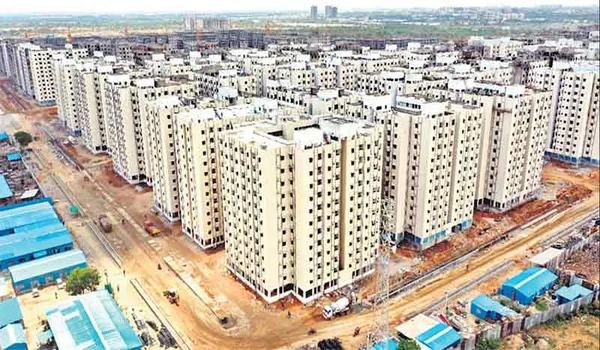
In the 2010s, Tellapur moved from a village to a high-rise real estate market. Growth was driven by its closeness to major IT corridors like Madhapur, Gachibowli, BHEL township, Kondapur, and Lingampally.
Developers bought large land parcels and started building:
- High-rise towers
- Gated communities
- Large township projects
Some of Hyderabad’s tallest residential towers are now located in Tellapur.
Property prices shifted from budget-level to premium-level as more IT families moved here for housing.
2018: Formation of Tellapur Municipality
In 2018, Tellapur was officially declared a Municipality under the Sangareddy district. As per official records:
- Population (2011): 24,193
- Households: 6,570
- Year of constitution: 2018
This marked Tellapur’s entry into Hyderabad’s Urban Local Body system, bringing better planning and infrastructure.
2020s: One of India’s Most Active Real Estate Markets
By the 2020s, Tellapur became one of the top real estate growth corridors in the country.
Between 2019 and H1 2024, around 18,960 new housing units were launched here.
Prices increased from ₹4,819 per sq. ft. in 2019 to ₹7,350+ per sq. ft. in 2024 — nearly 53% growth in five years.
Tellapur now benefits from:
- Fast access to ORR
- Growth of Financial District
- New premium residential projects
- Expanding social infrastructure
Today, Tellapur’s story is about how a historic 600-year-old settlement transformed into one of Hyderabad’s most modern and in-demand real estate hubs.
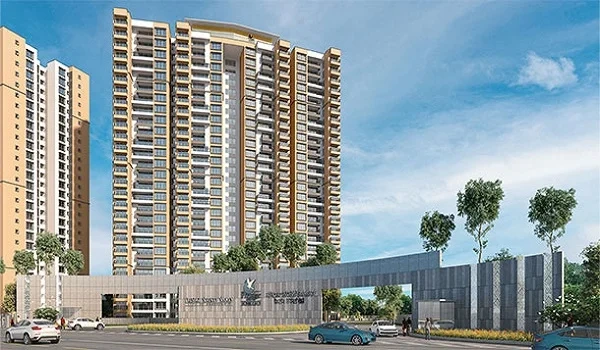
Prestige Group Upcoming Apartment Project is Prestige Golden Grove.
Frequently Asked Questions
How far back does Tellapur's recorded history go?
Tellapur has a history of more than 600 years. Its earliest written reference is a 1418 AD stone inscription that names the place 'Telumganapuram', believed to be an early form of the word Telangana.
Which district and PIN code does Tellapur fall under?
Tellapur lies in Ramachandrapuram mandal of Sangareddy district and uses PIN code 502032. The bordering Velimela-Kollur belt, where Prestige Golden Grove is located, falls under 502300.
How did Tellapur change after the 1990s IT boom?
As HITEC City, Gachibowli and the Financial District expanded and the ORR opened, Tellapur shifted from a quiet village to a high-rise residential micro-market with gated communities and townships.
When was Tellapur Municipality formed?
Tellapur was declared a Municipality under Sangareddy district in 2018. After the 2025-26 civic reorganisation it was merged into GHMC and placed under the Cyberabad Municipal Corporation.
Where does Prestige Golden Grove sit within this area?
Prestige Golden Grove is a Prestige Group project in the Velimela-Kollur belt (PIN 502300) near Tellapur in West Hyderabad, the same corridor that grew rapidly after the IT and ORR expansion.
Prestige Golden Grove Blog